Informieren
UN Women kämpft für Gleichstellung! UN Women ist die Einheit der Vereinten Nationen, die sich für die Gleichstellung der Geschlechter und die Stärkung von Frauen und Mädchen einsetzt.
Die Frauenrechtskommission (FRK) ist die Fachkommission für Gleichstellung der Geschlechter und für die Förderung von Frauenrechten der Vereinten Nationen. Sie tagt einmal jährlich für zwei Wochen im ersten Quartal im Hauptquartier der Vereinten Nationen in New York.

Viele Organisationen erheben regelmäßig Informationen zur der Lage von Frauen und Mädchen sowie der Gleichstellung der Geschlechter weltweit. Hier stellen wir Ihnen einige interessante Informationsquellen vor, auf welche Sie zurückgreifen können.

Zwei lachende Frauen - Peking +30 Visual
Credit: UN Women
Peking +30
Mehr als 30 Jahre nach der Pekinger Erklärung sind die Rechte von Frauen und Mädchen noch immer nicht verwirklicht. UN Women setzt sich weltweit für Gleichstellung, den Zugang zu Gerechtigkeit und den Abbau diskriminierender Strukturen ein.
Credit: UN Women Deutschland
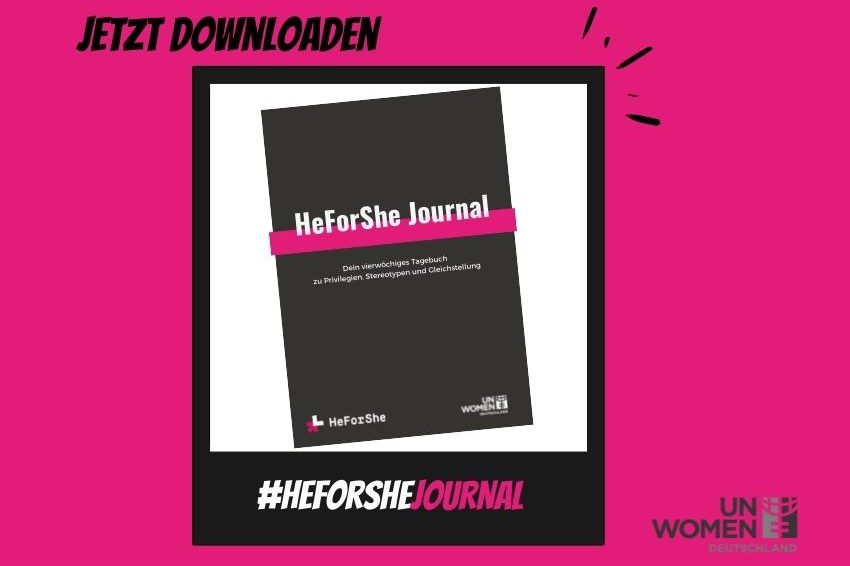
HeForShe Journal
Das vierwöchige Tagebuch zu Privilegien, Stereotypen und Gleichstellung
Zwei lachende Frauen - Peking +30 Visual
Credit: UN Women
Peking +30
Mehr als 30 Jahre nach der Pekinger Erklärung sind die Rechte von Frauen und Mädchen noch immer nicht verwirklicht. UN Women setzt sich weltweit für Gleichstellung, den Zugang zu Gerechtigkeit und den Abbau diskriminierender Strukturen ein.
Engagieren
Ihr Unternehmen möchte sich engagieren und Frauen und Mädchen weltweit stärken? UN Women Deutschland bietet Unternehmen, die an einer Zusammenarbeit interessiert sind, unterschiedliche Möglichkeiten. Wir freuen uns über Ihre Kontaktaufnahme!
Wir brauchen Sie als Mitglied bei UN Women Deutschland: Sie können als Privatperson oder Juristische Person eintreten und genießen dadurch bevorzugt Angebote zu Veranstaltungen, Informationen und Kooperationen. Sie besitzen außerdem volles Stimmrecht in der Mitgliederversammlung.
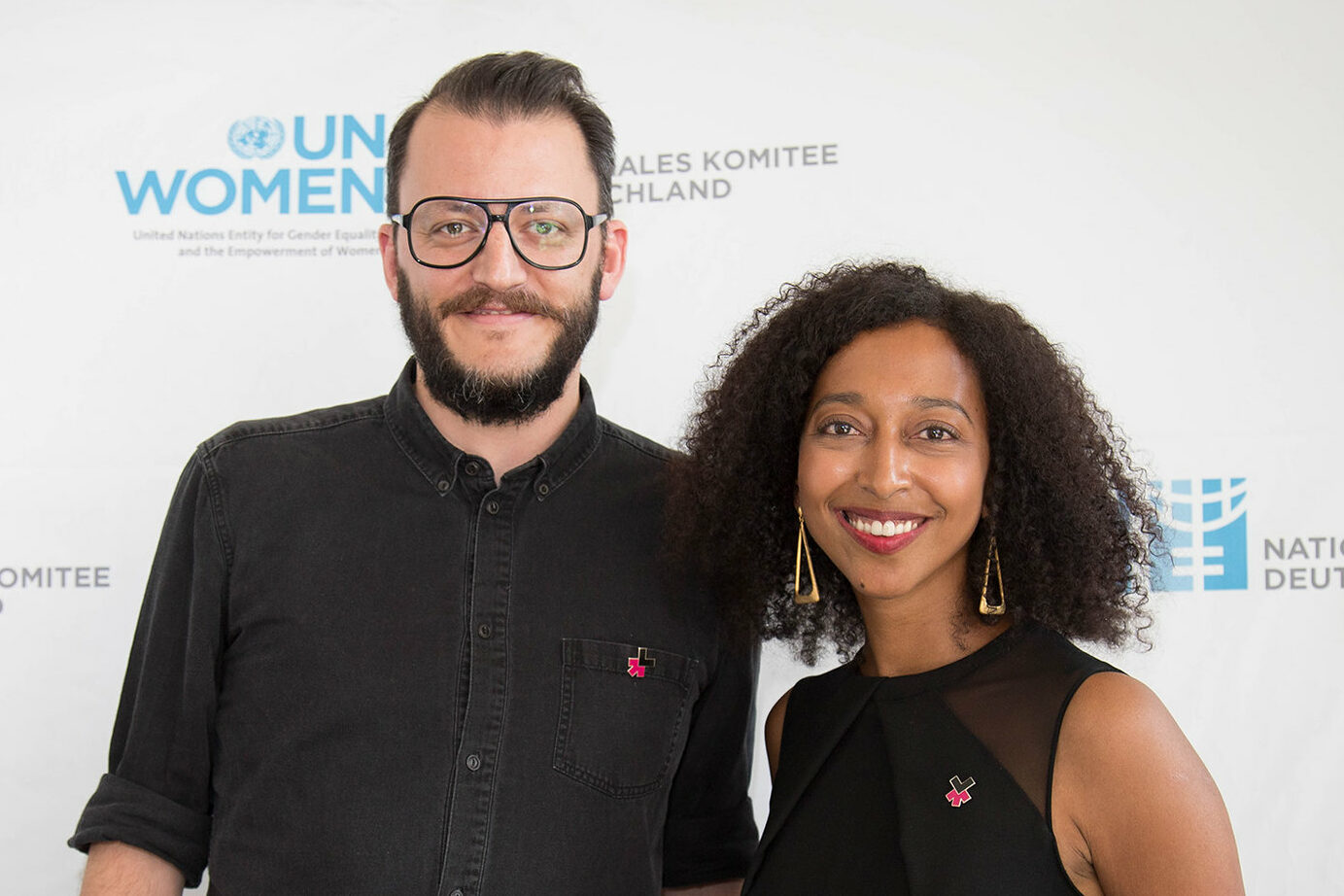
Auszeichnung der UN Women Kampagne HeForShe (2018). Bildrechte: UN Women Nationales Komitee Deutschland e.V./Ortrud Ladleif
Credit: UN Women Deutschland
Mitglied werden
Nur gemeinsam können wir die Gleichstellung der Geschlechter und die Stärkung der Frauenrechte erreichen!
Auszeichnung der UN Women Kampagne HeForShe (2018). Bildrechte: UN Women Nationales Komitee Deutschland e.V./Ortrud Ladleif
Credit: UN Women Deutschland
Mitglied werden
Nur gemeinsam können wir die Gleichstellung der Geschlechter und die Stärkung der Frauenrechte erreichen!
Auszeichnung der UN Women Kampagne HeForShe (2018). Bildrechte: UN Women Nationales Komitee Deutschland e.V./Ortrud Ladleif
Credit: UN Women Deutschland
Mitglied werden
Nur gemeinsam können wir die Gleichstellung der Geschlechter und die Stärkung der Frauenrechte erreichen!
Auszeichnung der UN Women Kampagne HeForShe (2018). Bildrechte: UN Women Nationales Komitee Deutschland e.V./Ortrud Ladleif
Credit: UN Women Deutschland
Mitglied werden
Nur gemeinsam können wir die Gleichstellung der Geschlechter und die Stärkung der Frauenrechte erreichen!
Auszeichnung der UN Women Kampagne HeForShe (2018). Bildrechte: UN Women Nationales Komitee Deutschland e.V./Ortrud Ladleif
Credit: UN Women Deutschland
Mitglied werden
Nur gemeinsam können wir die Gleichstellung der Geschlechter und die Stärkung der Frauenrechte erreichen!
Spenden
Werden Sie UN Women Friend! Als UN Women Friend unterstützen Sie die weltweiten Projekte von UN Women mit einer planbaren und nachhaltigen monatlichen Spende. Schon 50 Cent am Tag / 15 Euro im Monat reichen aus, um einen Unterschied für Frauen weltweit zu machen.

Mehr erfahren über UN Women-Friends

Helfen Sie dort, wo Hilfe am dringendsten gebraucht wird. Um schnell und verlässlich für Frauen und Mädchen in Not zur Stelle zu sein, brauchen wir Spenden, die wir flexibel einsetzen können.

Zur Spendenübersicht

Ob Geburtstag, Spendenlauf, Hochzeit oder persönlicher Anlass – starten Sie Ihre Spendenaktion und stärken Sie gemeinsam mit uns Frauen und Mädchen weltweit.

Mehr erfahren

Verschenken Sie Freude und tun gleichzeitig etwas Gutes dabei. Sie suchen ein sinnvolles Geschenk für Ihre Liebsten? Dann sind Sie hier genau richtig! Verschenken Sie eine Spende zu Gunsten eines UN Women Projektes Ihrer Wahl.

Mehr erfahren

Engagieren Sie sich wirksam und unterstützen Sie die Arbeit von UN Women. Ob mit einer Unternehmensspende oder als langfristige*r Partner*in – gemeinsam finden wir das passende Engagement für Ihr Unternehmen.
Unterstützen Sie UN Women Deutschland durch eine Spende per Banküberweisung.
Stärken Sie mit Ihrem letzten Willen Frauen und Mädchen!
Credit: UN Women/Ryan Brown
UN Women Friend
Stärken Sie die Rechte von Frauen mit Ihrem monatlichen Beitrag.
Credit: UN Women/Ryan Brown
UN Women Friend
Stärken Sie die Rechte von Frauen mit Ihrem monatlichen Beitrag.
Credit: UN Women/Ryan Brown
UN Women Friend
Stärken Sie die Rechte von Frauen mit Ihrem monatlichen Beitrag.
Credit: UN Women/Ryan Brown
UN Women Friend
Stärken Sie die Rechte von Frauen mit Ihrem monatlichen Beitrag.
Credit: UN Women/Ryan Brown
UN Women Friend
Stärken Sie die Rechte von Frauen mit Ihrem monatlichen Beitrag.
Credit: UN Women/Ryan Brown
UN Women Friend
Stärken Sie die Rechte von Frauen mit Ihrem monatlichen Beitrag.
Credit: UN Women/Ryan Brown
UN Women Friend
Stärken Sie die Rechte von Frauen mit Ihrem monatlichen Beitrag.
Credit: UN Women/Ryan Brown
UN Women Friend
Stärken Sie die Rechte von Frauen mit Ihrem monatlichen Beitrag.
Über Uns
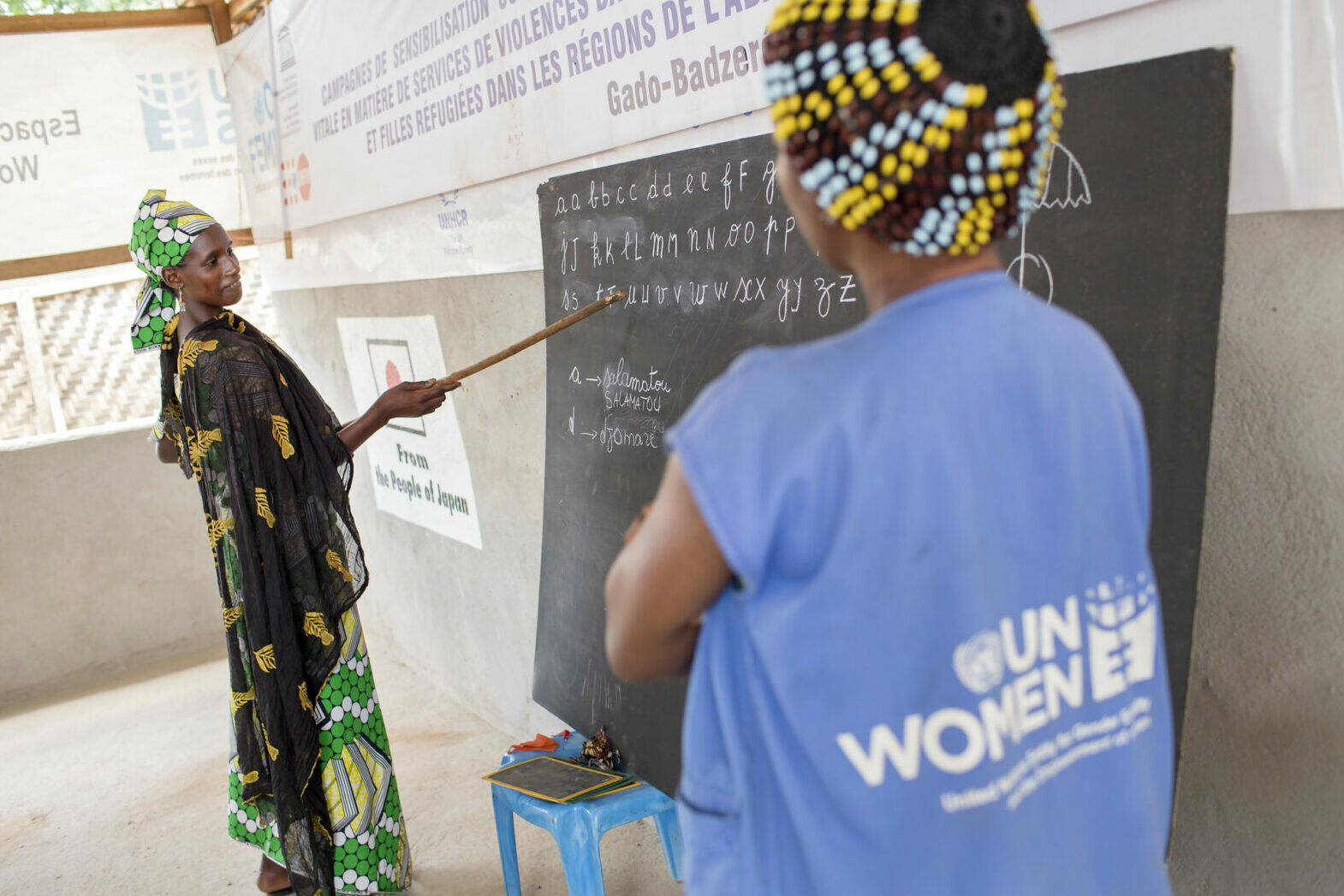
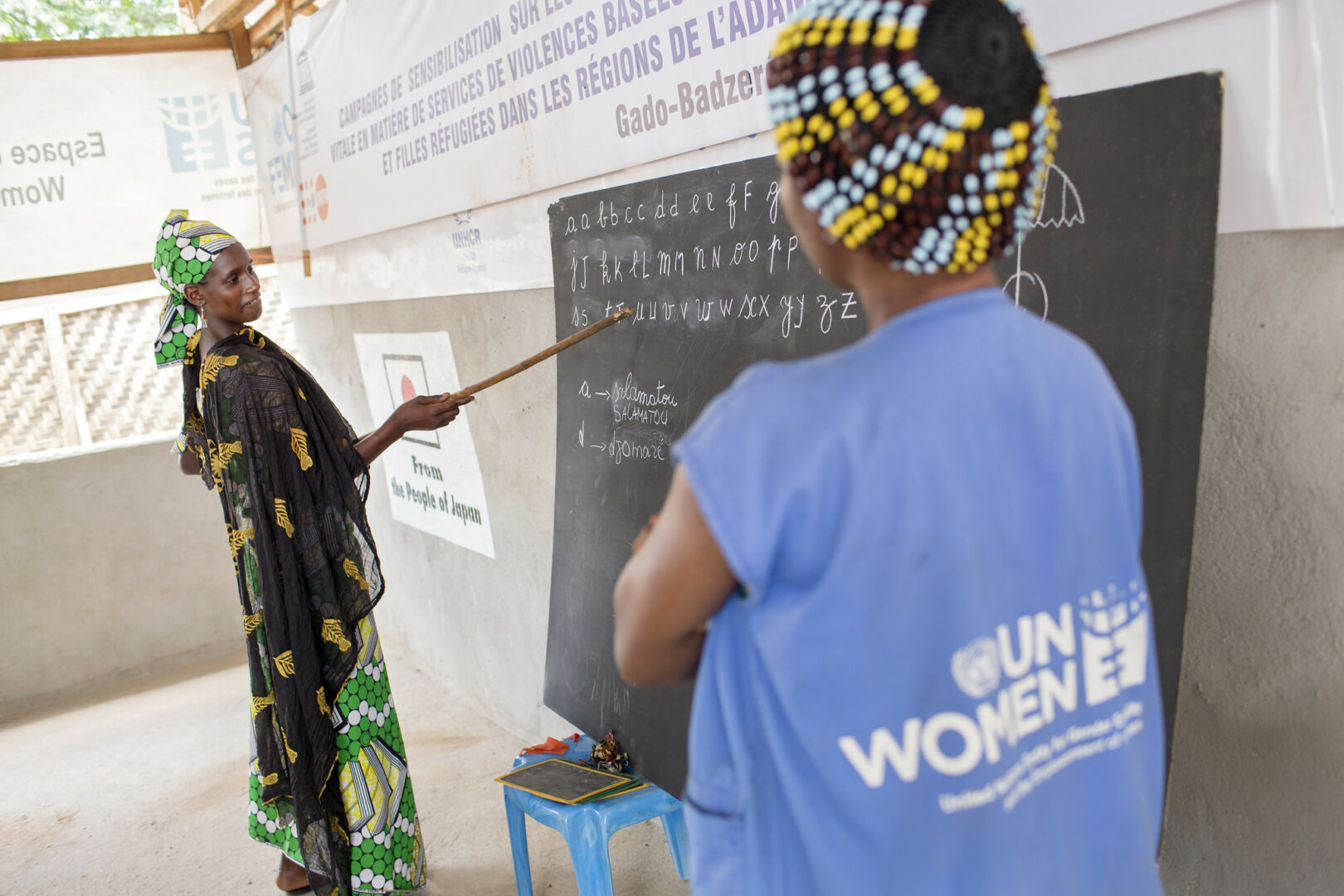
UN Women Humanitäre und Bildungsarbeit mit Geflüchteten in Kamerun. Credits: UN Women/Ryan Brown
Credit: UN Women/Ryan Brown
UN Women Deutschland
ist das deutsche Komitee von UN Women und kämpft für Frauenrechte weltweit.
UN Women Humanitäre und Bildungsarbeit mit Geflüchteten in Kamerun. Credits: UN Women/Ryan Brown
Credit: UN Women/Ryan Brown
UN Women Deutschland
ist das deutsche Komitee von UN Women und kämpft für Frauenrechte weltweit.
UN Women Humanitäre und Bildungsarbeit mit Geflüchteten in Kamerun. Credits: UN Women/Ryan Brown
Credit: UN Women/Ryan Brown
UN Women Deutschland
ist das deutsche Komitee von UN Women und kämpft für Frauenrechte weltweit.
UN Women Humanitäre und Bildungsarbeit mit Geflüchteten in Kamerun. Credits: UN Women/Ryan Brown
Credit: UN Women/Ryan Brown
UN Women Deutschland
ist das deutsche Komitee von UN Women und kämpft für Frauenrechte weltweit.
UN Women Humanitäre und Bildungsarbeit mit Geflüchteten in Kamerun. Credits: UN Women/Ryan Brown
Credit: UN Women/Ryan Brown
UN Women Deutschland
ist das deutsche Komitee von UN Women und kämpft für Frauenrechte weltweit.
Farbverlauf mit Schrift - HeForShe: Navigating Masculinities, Advancing Gender Equality
Zurück

International Conference – HeForShe: Navigating Masculinities, Advancing Gender Equality

The theme of this year‘s conference – hosted with and at the Embassy of Iceland – was “HeForShe: Navigating Masculinities, Advancing Gender Equality“. Iceland ranks first in the World Economic Forum’s Global Gender Gap Report 2026, maintaining this position for the 17th consecutive year.
Group picture of all 15 speakers together on stage
Group photo of the speakers at the international conference. (Photo: Mari Vass/UN Women Deutschland)
A lot of men feel pressure around identity, purpose, work, relationships, and expectations – but don’t have many spaces to talk about it openly. Uncertainty can be uncomfortable, and some people look for easy answers and orientation in dangerous places. But it also holds the potential for positive change and diverse conceptions of masculinity: A freer, more just life for everyone, with more opportunities to realize one’s full potential.

Masculinities are not fixed – they are shaped by communities, media, institutions, and culture. If we want healthier, more inclusive societies, we need both positive role models and structural change to overcome deeply rooted gender norms. By bringing together policymakers, diplomats, researchers, practitioners, activists and community leaders, the event aimed to create space to share insights and analysis, exchange of practices, and strategic dialogue – to provide ideas for concrete actions on how to mobilize and actively engage more men on gender equality issues.

H.E. Auðunn Atlason (Ambassador of Iceland in Berlin) remembered how the strike in Iceland in 1975 was an icebreaking moment. Five years later, Vigdís Finnbogadóttir was elected Iceland’s fourth president – the world’s first democratically elected female head of state. Since then, there has been an increased parity of men and women in parliaments, parental leave also for men, and shared care work. Iceland shifted norms and ideas regarding gender equality. However, alarmingly, we are all witnessing the backlash. The manosphere seems to be expanding, gender equality issues are used to polarize within societies, and this threatens our resilience and security. This is where we all need to come in, together.

Dr Angela Langenkamp (President of UN Women Germany) took it a step further, showing how closely related the manosphere, the tradwife movement, and the rise of autocratic regimes and anti-democratic, anti-rights movements are in undermining hard-won gains in women’s rights and gender equality. She called on people of all genders to stop these trends by joining forces to defend our constitutional rights and to uphold Article 3 of our Basic Law — gender equality — which is a central value enshrined in the European Charter, as well as being a clear, stand-alone goal and a central, fully integrated target of the Agenda 2030. However, if progress continues to slow, halt or reverse, the Gender Snapshot 2026 estimates that it will take another 171 years to achieve gender equality. Therefore, we need men and women to use their influence and power to make homes, workplaces, institutions and communities more equal. Now more than ever, men at all levels of society must stand up for women’s rights as human rights and fight for gender equality and justice.

Francesco Merola from the HeForShe Global Office at UN Women giving a keynote speech on stage
Francesco Merola (Photo: Mari Vass/UN Women Deutschland)
Francesco Merola (HeForShe Global Office at UN Women) noted that gender inequality and restrictive gender norms harm everyone, including men. HeForShe gives men, who still hold much of the decision-making power that shapes societies, a clear call to action: take responsibility and act for gender equality—in workplaces, families, communities, and institutions. It creates spaces for men to engage, reflect, and challenge existing norms. And provides the tools, resources and opportunities to turn that engagement into action. To challenge harmful narratives. To mobilize others to drive social norms change. To drive institutional change through male leaders.

Amongst the resources are: The Barbershop Toolkit 2.0 (more information below). The Male Allyship Toolkit, a comprehensive guide designed to support men in the workplace to be allies in the pursuit of gender equality. The 2026 HeForShe IMPACT Report, which highlights how the HeForShe Alliance and National Chapters are advancing gender equality in their industries and communities. The Small Steps, Big Difference Report, which highlights how FTSE 100 companies can support domestic violence survivors through workplace initiatives.

We had two lightning rounds – videos by practioners. We asked them to explain their approach to engaging men and/or boys on gender equality, and what change they are hoping to create. You can see all submitted videos on YouTube.

The first of two panel discussions, both moderated by Nora Teuma (board member UN Women Germany), looked at “Changing Masculine Norms: Youth, (Social) Media, and Society“. It explored how young people can find their bearings in an increasingly polarized (online) environment around gender and masculinities. Young people can be exposed to misogynistic and polarizing content very quickly – often without actively looking for it. We focused on spaces and approaches that can help create opportunities for constructive dialogue and challenge existing ideas about masculinities and gender norms.

Ari Laprell (youth political spokesperson, German Guide and Scout Federation) pointed out that youth organisations – that are in need of reliable funding – can provide an alternative to the norms young people encounter online and in society. They offer spaces where boys, young men, and people perceived as male can talk more openly about emotions, vulnerability, and identity without feeling judged, while realising how else they also could be. There needs to be an ongoing exchange of opinions, a continuous and sometimes critical discussion – especially with young people who are already being drawn into misogynistic online spaces.

Paola Profeta (Dean for Diversity, Inclusion and Sustainability, and Director of the Research Lab for Gender Equality, Bocconi University) spoke about how the Bocconi Research Lab for Gender Equality is conducting research in support of HeForShe on the intersection of AI, masculinities, and gender equality. The aim is to map out how AI is affecting culture, e.g. through by who builds it and decides what it learns. She also elaborated on how important it is to be measuring results, e.g. in terms of representation and gaps, and have them inform actions, e.g. start programs that provide targeted support for care givers.

Hyeshin Park (head of the Gender and Development Unit, OECD) talked about the policies that have shown potential for making progress toward healthier and more equal masculinities. For example, parental leave that can actually be taken or continuously measuring what social norms are and critically thinking about how to reshape them. She also spoke about how policymakers should respond to the growing sense of uncertainty among some young men without reinforcing the idea that gender equality is responsible for their difficulties. Men’s opportunities need to broaden, and they need to be part of the discussion.

Jaafar Abdul Karim (host at Deutsche Welle, Head of „JaafarTalk“) spoke about what has worked for him to give young people a platform to discuss many different aspects of identity, relationships, religion, society, and gender. He pointed out that it is very important to listen, to get an open discussion going, to leave your bubble – especially if you are not agreeing with each other. Journalists and media have enormous influence over which types of masculinity become visible, diverse role models play an important role as well.

Katharina Jestaedt, Director General of the Directorate General Women and Gender Equality, giving a speech on behalf of Parliamentary State Secretary Mareike Wulf
Katharina Jestaedt (Photo: Mari Vass/UN Women Deutschland)
Afterwards, we heard from Katharina Jestaedt (Director General – Directorate General Women and Gender Equality speaking on behalf of Parliamentary State Secretary Mareike Wulf at the Federal Ministry for Education, Family Affairs, Senior Citizens, Women and Youth) about “Engaging Boys and Men in Gender Equality: Priorities of the German Federal Government”. She started by expressing her appreciation for UN Women’s HeForShe movement. She said that gender equality policy must include boys and men, and that this does not compete with policies for women and girls. She elaborated on the challenges men and boys face, and that this results in two guiding principles for the ministry: Securing expertise, experience, and structures, as well as working on the basis of evidence and deepening knowledge. She explained their four key areas of action: education and transitions with a gender-reflective approach, health and psychosocial stability; family, fatherhood and care, as well as violence prevention and democracy education.
Martin Speer and Gerhard Hafner, HeForShe Germany Advocates, on stage giving a sneak peek into the HeForShe Barbershop Toolkit 2.0
Gerhard Hafner and Martin Speer (Photo: Mari Vass/UN Women Deutschland)
Then we got a sneak peek into the “HeForShe Barbershop Toolkit 2.0” by Martin Speer and Gerhard Hafner (HeForShe Germany Advocates). It is an evidence-informed resource to engage men in meaningful conversations on gender equality, masculinities, and allyship. In the one year since its relaunch, it has moved into implementation across different contexts, with early insights from partners like NYU Stern, Teck Resources, and UK Policing: One of the key strengths is the adaptability with different sectors, institutions, and contexts.    
Petter Dotterud Anthun, Senior Adviser Gender Equality & LGBTI, Nordic Council of Ministers, on stage presenting the main results and highlights of “The State of Nordic Men
Petter Dotterud Anthun (Photo: Mari Vass/UN Women Deutschland)
Petter Dotterud Anthun (Senior Adviser Gender Equality & LGBTI, Nordic Council of Ministers) presented the main results and highlights of “The State of Nordic Men“ study by Equimundo. He reported on a general broad support for gender equality in the Nordics. At the same time, more than half of men agree that “it is harder for men to access new opportunities”; “no one cares about men”, “feminism is about giving advantages to women”; “the media portrays men negatively”, and “men are at a disadvantage on dating apps”.
The second panel discussion was on “Making Equality Part of the System: Leadership, Responsibility, and Change“ and looked at how we can make gender equality a shared responsibility and a structural reality. How we can change the norms, behaviors, incentives, and institutions that shape everyday lives. How we can engage men as agents of change while keeping women’s rights, experiences, and leadership at the center. And how responsibility can be translated into concrete action and accountability.

Petter Dotterud Anthun spoke about the lessons learned: Policies can change the norms – now much more men stay at home in Nordic countries than before. He said if men feel included and seen regarding the challenges they are facing, moving forward can go faster and they can be better allies for women. So governments and institutions must make sure that men are also included in the discussion and know how it benefits them as well.

Francesco Merola spoke about transformative masculinity and how we can create the conditions for men to embrace it and to move from awareness and statements of support to sustained, measurable action. At home: men who are equally taking part in care work and are embracing their emotions, maybe go to therapy. At the workplace: men who are supporting women and use their influence to make it a more equal space. Around friends and families: men who challenge sexist jokes, speak and stand up and explain why the comments are harmful. It is important to create the spaces for men to have these conversations and give them the tools to act in a feminist way. Organization and companies must set the framework for gender equality. Not just representation, but also practices and organizational culture, e.g. be(come) a place where men feel free to take parental leave.

Battal Yali (co-founder kolibri.) elaborated that when men lose some of their advantage, it feels like an attack to them. And that it is necessary to make them feel uncomfortable – since a man who feels comfortable has no reason to question the status quo. He demanded that men should not be awarded for the bare minimum. They need to stay committed to changing the patriarchy, speak up, and own up to their responsibility. And that they should not expect women to voice their demands in the nicest or most easily understandable way possible. We need to create conversations about masculinity that acknowledge men’s own pressures and insecurities while addressing the harm that rigid gender norms can cause especially for women and girls.

Thorey V. Proppe (founder and CEO at Alda) spoke about effective levers in the workplace for turning gender equality from a stated value into something that is actually built into how organizations make decisions, allocate power, support caregiving for all employees, and measure success. Today, 5 out of 21 leaders of companies in Iceland are women. But leaders were experiencing that even though they had equal pay, there was no equality within the company. They need data to see if they are improving. She explained that we are currently moving toward an employer’s market; a DEI strategy is no longer seen as a competitive advantage for a company, which is why many are choosing not to pursue one any more.

In her Closing Remarks and Call to Action, Nasime Salehi (board member UN Women Germany) stressed that we need to leave the conference with more than new perspectives and ideas: A commitment to act. To challenge stereotypes when we encounter them. To create spaces where men and boys can speak openly about identity, vulnerability, and belonging. To use our influence — in our workplaces, institutions, communities, and homes — to advance equality for all genders. Change does not happen simply because we agree that equality matters. It happens when we take responsibility for making it real.
Duo Emilsson, Hanna-Rosa & Linda Emilia Emilsson, on stage playing the violin and viola
Duo Emilisson (Photo: Mari Vass/UN Women Deutschland)
The Duo Emilsson, Hanna-Rosa & Linda Emilia Emilsson, played violin and viola and melodically paved the way for a more in-depth exchange during the reception that followed.

You can find more impressions in our Instagram highlight and more pictures here (credit: Mari Vass/UN Women Deutschland).

Thank you to “Jessis Events for Kids“ for the excellent child care service.

October 2026
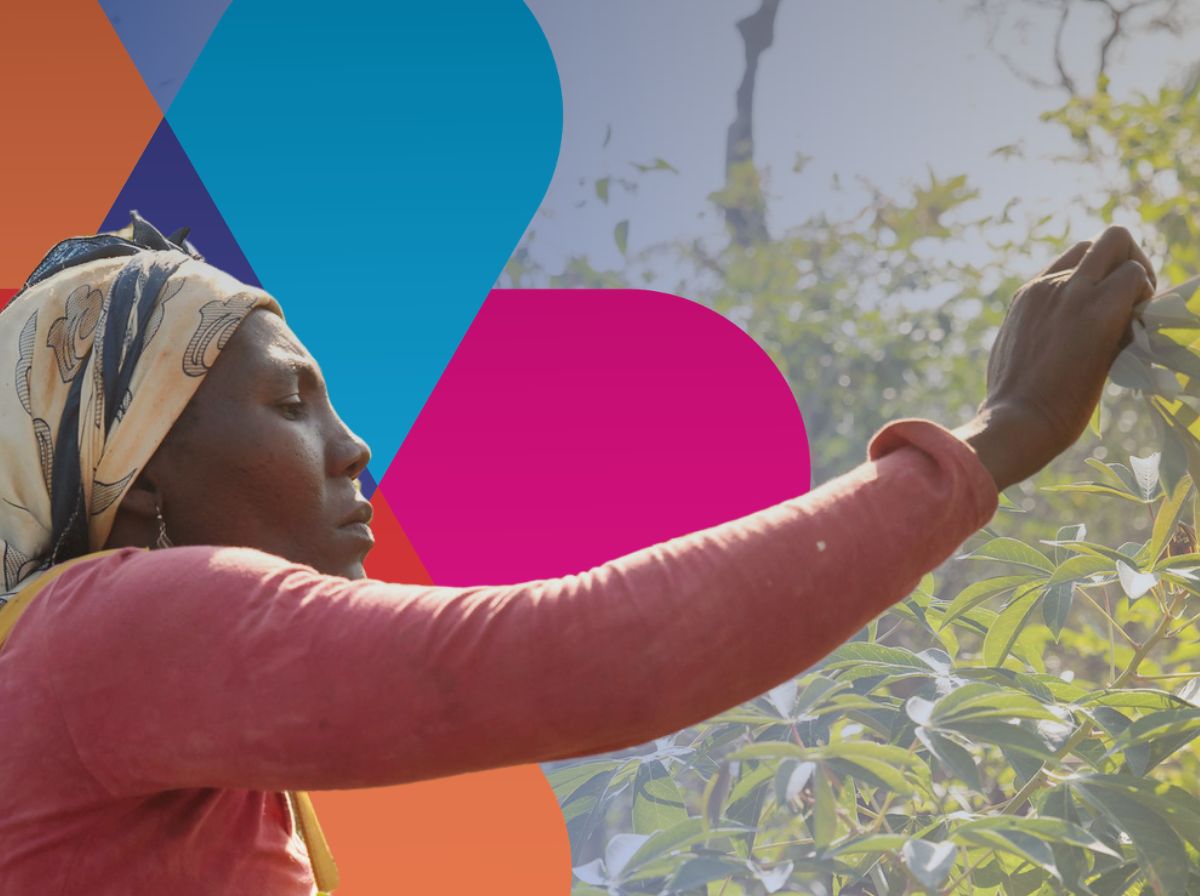
Landwirtin prüft ihre Ernte - im Hintergrund UN Women Design
Credit: UN Women/Ryan Brown
Veranstaltungen Cultivating Change: Women Reclaiming and Transforming Food Systems Webinar Series | International Year of the Woman Farmer
To mark the International Year of the Woman Farmer, GIZ FemHub, UN Women Germany and Rural Women’s Assembly are launching a three-part international webinar series.
weiterlesen
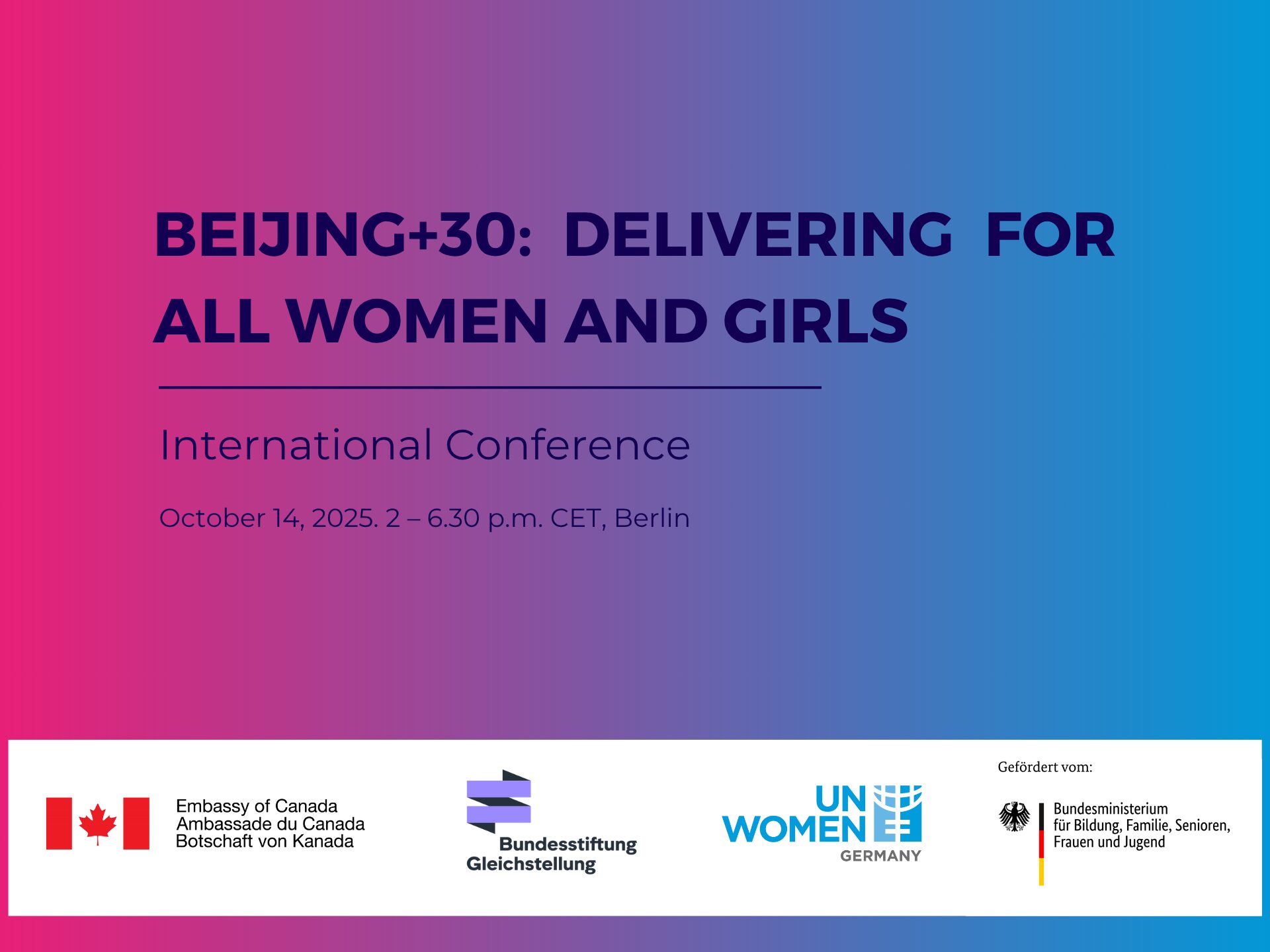
Title Design für die Internationale Konferenz
Credit: UN Women Deutschland
Veranstaltungen International Conference: Beijing+30: Delivering for all women and girls
Recap: The International Conference: Beijing+30: Delivering for all women and girls
weiterlesen
International Conference: A Feminist Agenda for the Future
Credit: UN Women Deutschland
Veranstaltungen International Conference: A Feminist Agenda for the Future
Recap: The International Conference „A Feminist Agenda for the Future“ discussed key progresses toward gender equality.
weiterlesen
Hauptmotiv (Zwei Menschen halten Weltkugel)
Credit: UN Women Deutschland
Veranstaltungen Konferenz: Feministische Utopien leben.
Am Internationalen Frauentag haben wir unsere Kampagne zu Feministische Utopien leben gestartet, die uns das gesamte Jahr begleitet. Das Wissen und die Rückmeldungen aus der nationalen und internationalen Netzwerkarbeit, aus den Veröffentlichungen feministischer Denker*innen, aus unseren Webinaren und Aktionen flossen in die Gestaltung dieser Konferenz ein.
weiterlesen
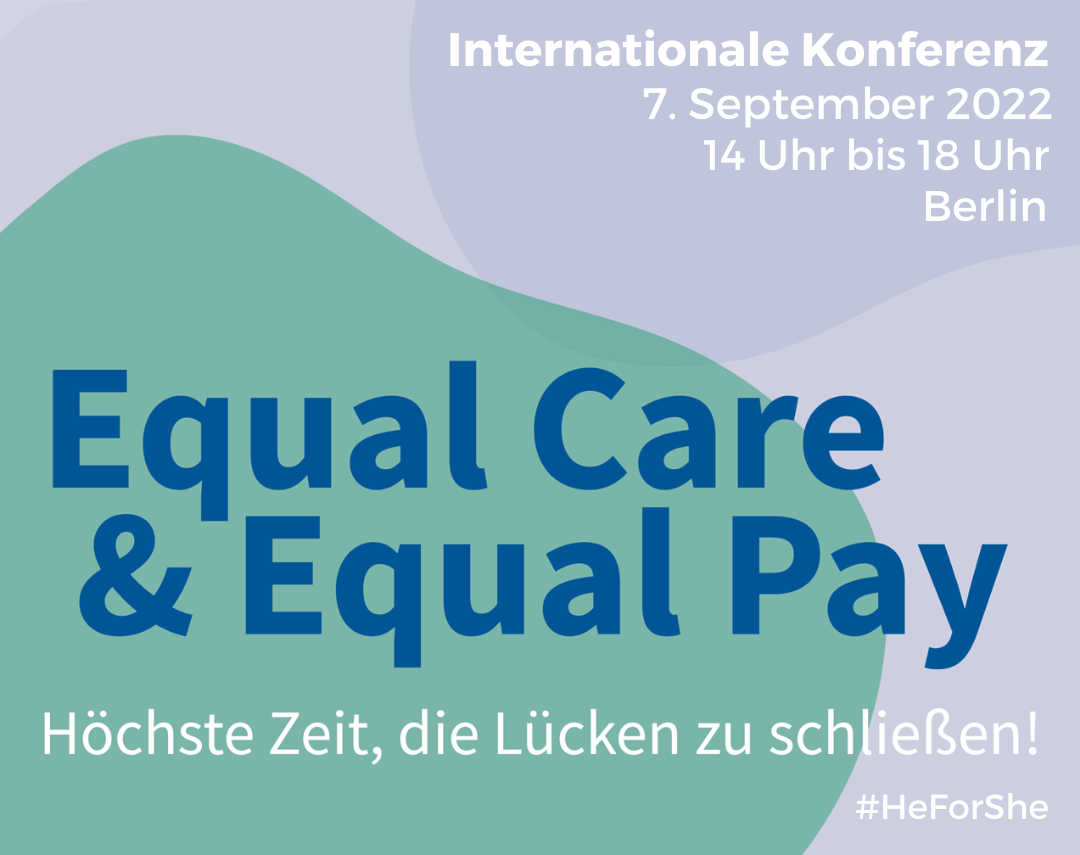
Equal Care & Equal Pay - höchste Zeit, die Lücken zu schließen
Veranstaltungen Equal Care und Equal Pay – höchste Zeit, die Lücken zu schließen!
Den Veranstaltungsbericht samt der verabschiedeten Forderungen und Fotos finden Sie hier.
weiterlesen
Credit: UN Women Deutschland
UN Women Deutschland A New Deal for Gender Equality
UN Women Deutschland lud am 16. Juli 2021 zur Internationalen Konferenz „A New Deal for Gender Equality – Building back better after the pandemic“ ein.
weiterlesen
Credit: UN Women Deutschland
Veranstaltungen Internationale Konferenz: „Planet 50:50 – Europas Beitrag zu den SDGs“
Vertreter*innen der Zivilgesellschaft haben am 15.10.2020 im Rahmen der Konferenz „Planet 50:50 – Europas Beitrag zu den SDG’s“ Forderungen an die Politik erarbeitet.
weiterlesen
Credit: UN Women Germany
Veranstaltungen International Conference: „Planet 50:50 – Europes Contribution to the SDGs“ (EN)
weiterlesen